Empowering Student Independence with Smart Wayfinding
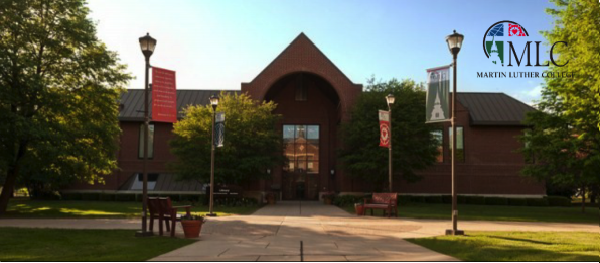
At Martin Luther College, the library team implemented StackMap to help students find materials faster and navigate the space with confidence. We spoke with Linda Kramer about how StackMap reduces directional questions, supports self-guided use, and provides data that informs internal planning and decision-making.
While not large, the library’s multiple study areas, collections, and service points can be challenging for first-time users. Without a formal orientation program, students needed a way to get comfortable in the space quickly.
StackMap connects the catalog directly to the physical layout, guiding users to the correct floor and range. The result is a more intuitive experience that reinforces existing signage, improves efficiency, and helps students move through their research with less friction.
Linda noted that students have a great reaction when they first see how the StackMap “Map It” feature works:
It was fun to watch their faces when we showed them the ‘Map It’ button. You could see that moment where they realized they could find things on their own. For novice users especially, it seemed like it was really working well.
The language used within StackMap also mirrors the terminology used on end-cap signage.
Even without extensive promotion, StackMap usage has grown year-over-year. After introducing the tool during instruction sessions, staff observed students actively using StackMap Collection Mapping integrated with their Aspen catalog.
We sent students out to start their research right away, and many were using the row directions instead of just searching alphabetically. It was especially helpful for those newer to navigating the library.
Beyond improving navigation, usage insights can also support broader planning conversations. Usage trends often align with peak research periods throughout the academic year. Like many academic libraries, Martin Luther College uses data to evaluate services, support operational decisions, and demonstrate value internally.
If we needed to justify something internally, this type of data would definitely support those conversations.
StackMap also helps reduce barriers for students who may hesitate to ask for help. By offering clear, self-service navigation, the library empowers users to find what they need on their own while still ensuring support is available when needed.
Anything we can do to put that power in students’ hands is important. Sometimes students hesitate to approach a service desk, so giving them tools to navigate on their own makes a real difference.
As libraries continue adapting their spaces and services, StackMap serves as a bridge between digital discovery and the physical collection, helping students find what they need more efficiently while extending the reach of library staff expertise.
—Linda Kramer, Director of Library Services, Martin Luther College Library